Urology
Enlarged prostate: understanding the symptoms after 50
Department of Urology · 5 min read · Updated 18 July 2026
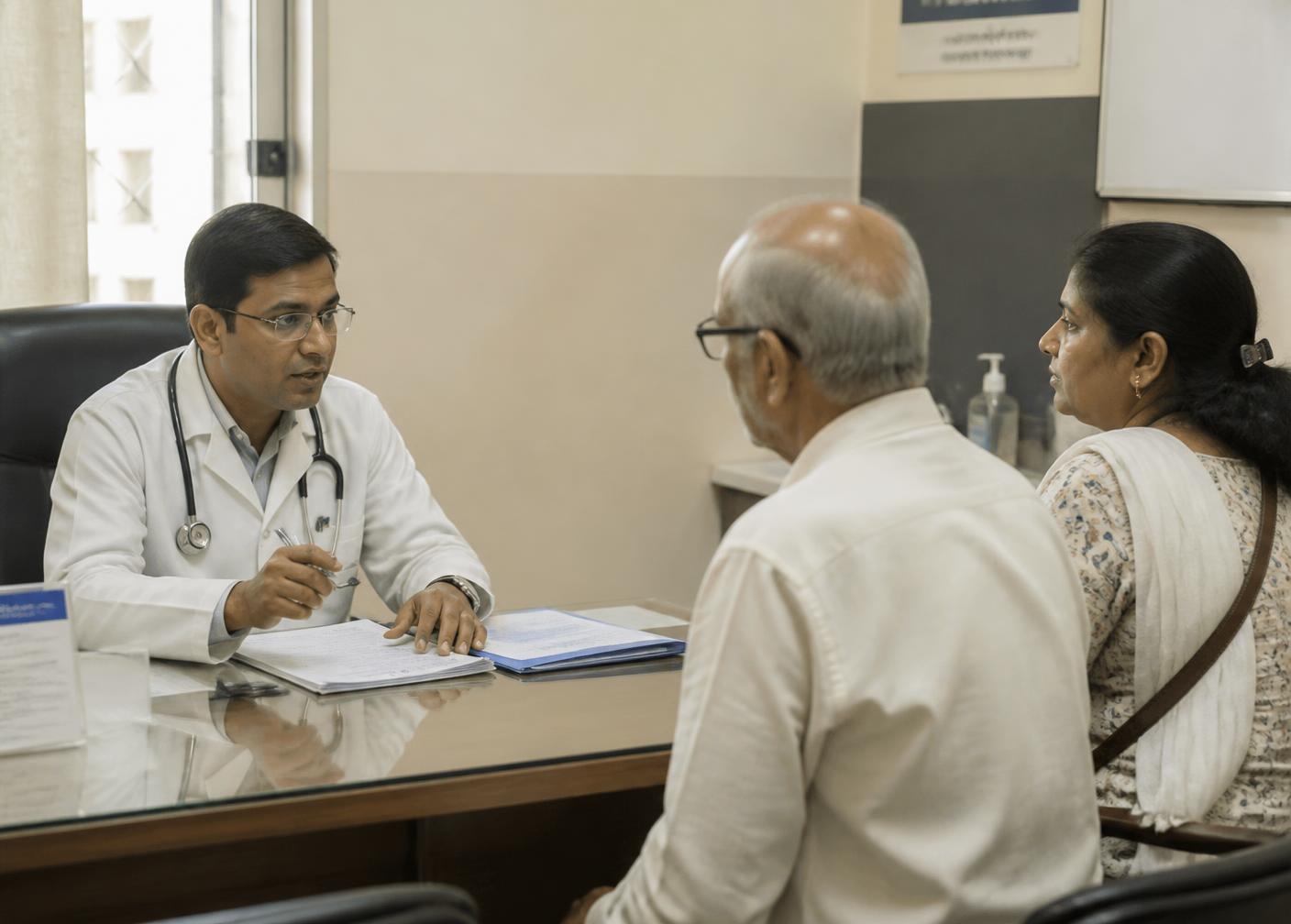
The prostate enlarges in most men as they age. It is not cancer and it is not dangerous in itself, but as the gland presses on the urinary passage it changes how you pass urine — and many men put up with this for years before mentioning it.
What patients notice
The symptoms build slowly, which is exactly why they get ignored. Family members often notice the night-time trips to the bathroom before the patient admits there is a problem.
- A weak or interrupted stream
- Having to wait or strain before the flow starts
- Getting up two or more times at night to urinate
- A feeling that the bladder has not emptied
- Sudden urgency, occasionally with leakage
Assessment
Evaluation is straightforward: a symptom score, an examination, an ultrasound to measure the prostate and the urine left in the bladder after passing, and a urine test to rule out infection. A PSA blood test is discussed where appropriate, because prostate cancer can produce similar symptoms and needs to be excluded rather than assumed absent.
Treatment options
Mild symptoms often need nothing more than fluid timing advice — reducing evening fluids and caffeine. Moderate symptoms usually respond to medication that relaxes the prostate or shrinks it over months.
Surgery, most commonly TURP, is advised when medication no longer controls symptoms, when the bladder is not emptying, when there is repeated infection or bleeding, or when retention has occurred. It is done endoscopically, without an external cut.
Do not wait for retention
Complete inability to pass urine is a painful emergency that requires immediate catheterisation. It is also avoidable: men who come in when the stream first weakens usually have simpler options than those who arrive in retention.
This article is general health information and does not replace a consultation. For advice on your own condition, book an appointment or call +91 80067 77996. In an emergency, call +91 80067 77996.
Book an appointment