Urology
Kidney stones: why they form, and when they need treatment
Department of Urology · 6 min read · Updated 20 July 2026
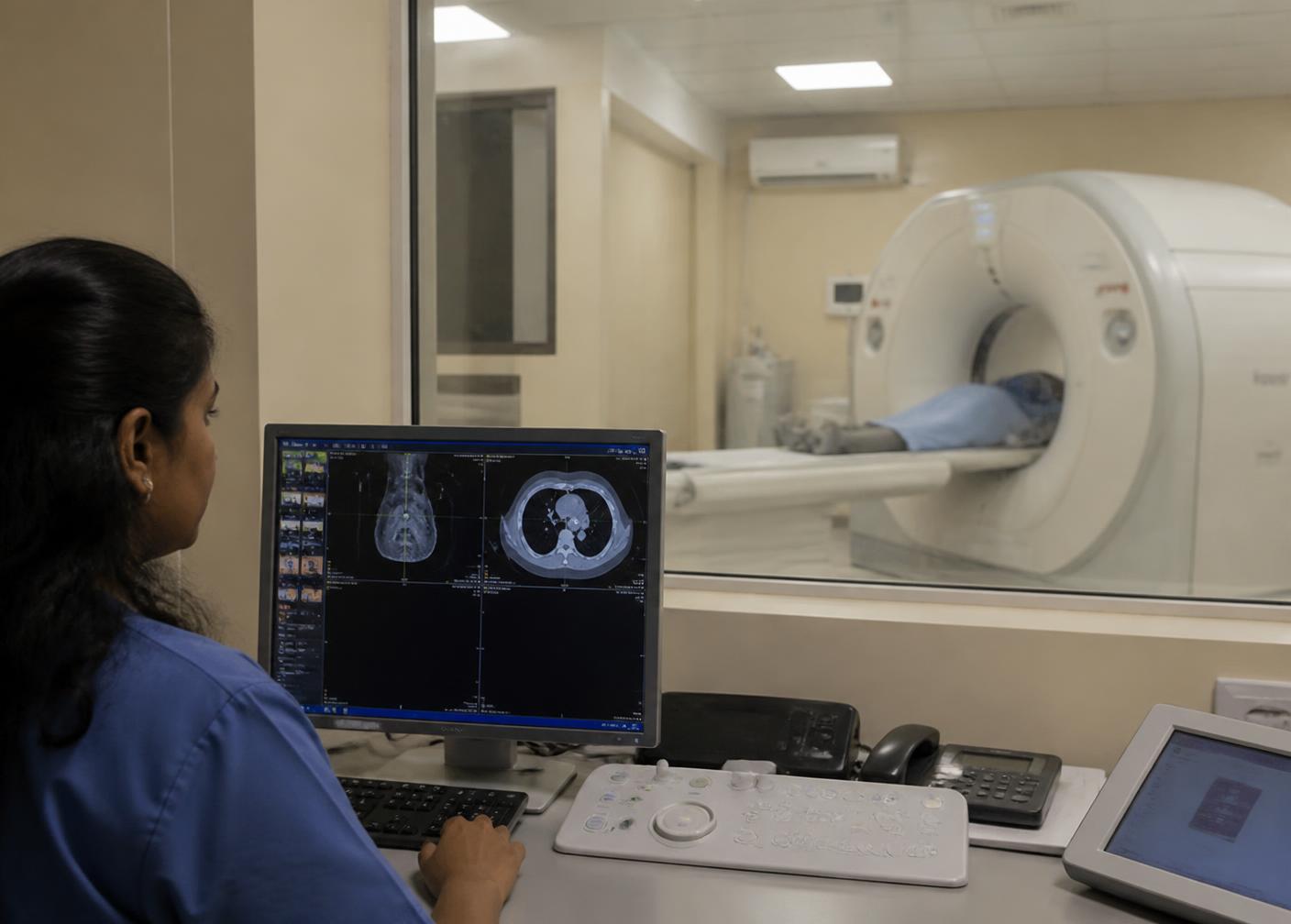
Kidney stones are the single commonest reason patients come to our urology outpatient department. Hot summers, hard water and simply not drinking enough through the day make this region a high-stone belt, and many patients we see are on their second or third episode.
How a stone announces itself
Classic stone pain starts suddenly in the flank or the side of the back, comes in waves, and may travel down towards the groin. It is often accompanied by vomiting, and many patients cannot find a comfortable position to lie in. Some stones cause no pain at all and are found on a scan done for another reason.
- Severe waves of pain in the flank, back or lower abdomen
- Blood in the urine, sometimes visible only on testing
- Burning or frequent urination
- Nausea and vomiting with the pain
- Fever with the pain — this needs same-day attention
Which stones need a procedure
Not every stone needs surgery. Small stones, usually under 5 mm, often pass on their own with plenty of fluids and medication that relaxes the ureter. What matters is the size, the position, whether the kidney is obstructed and whether there is infection.
When a procedure is needed, it is almost always endoscopic. Ureteroscopy with a laser handles most ureteric stones through the natural passage. Larger kidney stones are cleared by PCNL through a small tract in the back. Bladder stones are broken and washed out by cystolitholapaxy. Open surgery is rarely required.
Preventing the next one
Stones recur, and prevention is unglamorous but effective. The single most useful habit is drinking enough water that your urine stays pale through the day — in summer that generally means three litres or more.
- Keep a water bottle with you and finish it twice a day
- Reduce added salt; it drives calcium into the urine
- Do not stop dairy — moderate calcium intake actually protects
- Get an ultrasound once a year if you have had stones before
When to see a doctor
Come in the same day if the pain is severe, if there is fever with the pain, if you are vomiting and cannot keep fluids down, or if you cannot pass urine at all. Any episode of visible blood in the urine should be evaluated even if it settles on its own.
This article is general health information and does not replace a consultation. For advice on your own condition, book an appointment or call +91 80067 77996. In an emergency, call +91 80067 77996.
Book an appointment