IVF & Fertility
Female infertility: how it is investigated
IVF & Fertility Centre · 5 min read · Updated 10 July 2026
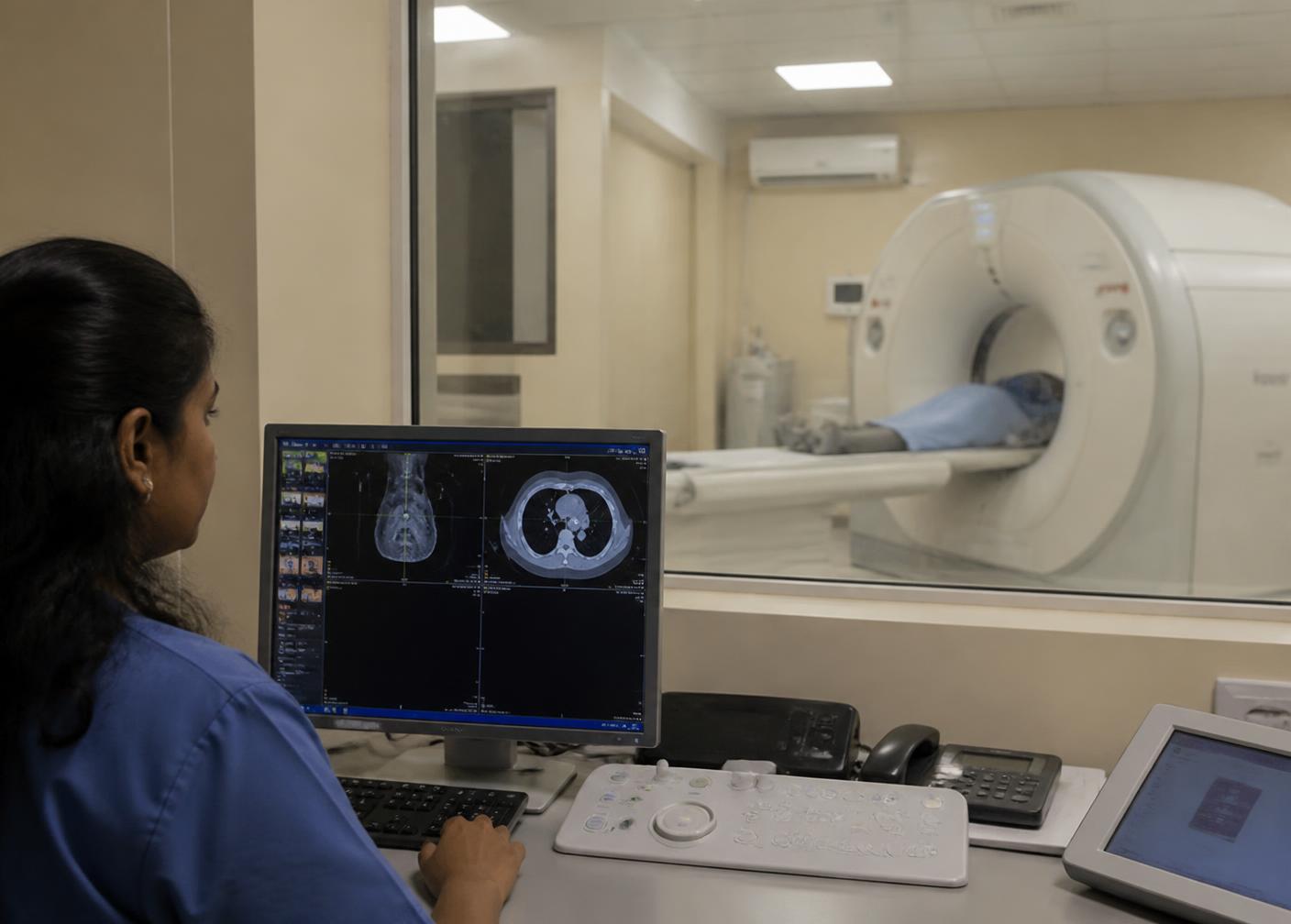
A fertility evaluation in women is structured, not open-ended. It sets out to answer three questions: are eggs being released, can the sperm and egg meet, and can an embryo implant and grow.
Is ovulation happening
Regular monthly cycles usually mean ovulation is occurring, but this is confirmed with hormone tests and follicular monitoring — a series of short scans across the cycle that show a follicle growing and then releasing. PCOS and thyroid disorders are the usual reasons ovulation is irregular, and both are treatable.
Are the tubes open
Blocked tubes prevent the egg and sperm from meeting. Patency is checked by a dye test or by laparoscopy. Previous pelvic infection, tuberculosis and endometriosis are the common reasons for blockage in this region, and when both tubes are blocked, IVF bypasses the problem entirely.
Is the uterus ready
Fibroids, polyps, adhesions and a septum can all interfere with implantation. Ultrasound gives the first look; hysteroscopy shows the cavity directly and often allows the problem to be corrected in the same sitting.
Age matters, and it is worth saying plainly
Egg quality and number decline with age, sharply after the mid-thirties. If you are over 35 and have been trying for six months, do not wait the full year before seeking evaluation.
This article is general health information and does not replace a consultation. For advice on your own condition, book an appointment or call +91 80067 77996. In an emergency, call +91 80067 77996.
Book an appointment